Jan Bula a Václav Drbola

Blessed

Jan
Bula

&

Václav
Drbola

Odvaha
 …virtues that characterize two martyrs of the communist show trials of the 1950s, priests Jan Bula and Václav Drbola.

The news of their execution was originally intended to intimidate the Church and the religious opposition to the regime; today, however, their story serves as a symbol of forgiveness, unbreakable courage, and hope.
What makes their story special?

Grafika

These two martyrs are the first victims of 20th-century totalitarian regimes to be beatified in the Czech Republic. Both priests are also the first to be beatified in modern Czech history (having lived and died in the 20th century).

Grafika

Since 1989, this is only the second beatification process to have been successfully completed in the Czech Republic.

Grafika

They are the first individuals ever to be beatified or canonized in the Diocese of Brno.
Biographies
The story of Jan Bula and Václav Drbola takes us back to the 1950s, the years immediately following the communist coup in what was then Czechoslovakia. Following the example of the Soviet Union, the Communist Party sought to transform every aspect of life in the country and established a totalitarian regime that aimed to subordinate the Church to state power.
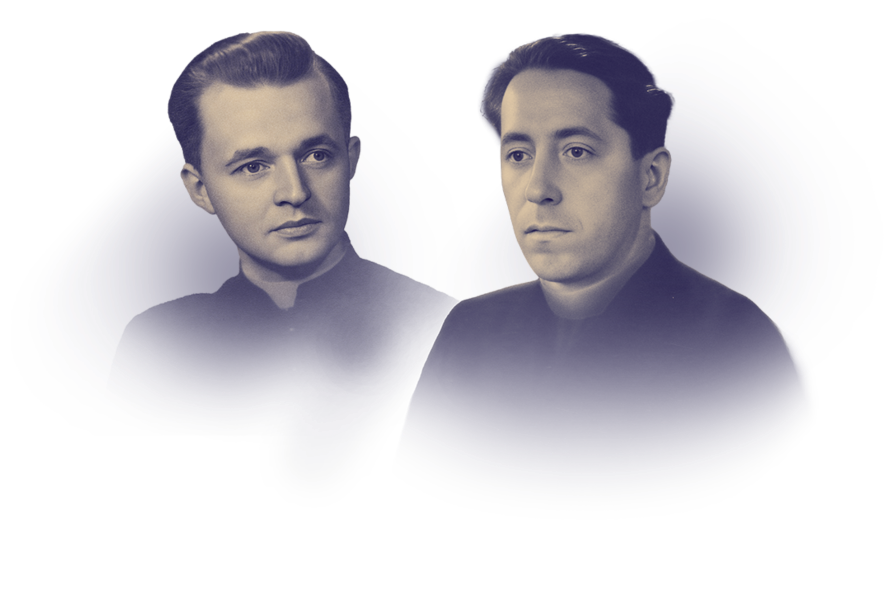
Jan Bula

Jan Bula (1920–1952) was a young Catholic priest born in Lukov near Moravské Budějovice. He was ordained to the priesthood in 1945 and was appointed to serve in Rokytnice nad Rokytnou in the Vysočina region, where he carried out his entire priestly ministry. He quickly became deeply respected and loved by his parishioners. With pastoral zeal and fatherly care, he devoted particular attention to young people and actively supported Catholic associations and parish life. In 1951, he was unjustly arrested and falsely accused in connection with the so-called Babice trials (a 1951 political show trial in Czechoslovakia), despite having committed no crime and having been detained several months before the Babice murders occurred. Following brutal interrogations marked by physical violence, he was sentenced to death in a politically motivated show trial. On May 20, 1952, he was executed in Jihlava. On the eve of his execution, he was permitted to write farewell letters to his family and loved ones, expressing his faith, forgiveness, and trust in God. After the fall of the communist regime, the court officially rehabilitated him in 1990. In 2004, the cause for his beatification was formally opened, recognizing his witness of faith and fidelity to Christ in the face of persecution.

Václav Drbola

Václav Drbola (1912–1951) was born in Starovičky in South Moravia. He was ordained a priest and began his pastoral ministry in 1938, serving successively in the parishes of Slavkov u Brna, Čučice, and Bučovice, and from 1950 in Babice in the Třebíč region. He devoted himself wholeheartedly to his priestly vocation. He worked especially with young people, actively participated in cultural and community life, and courageously defended Catholic associations after the communist regime severely restricted their activities. In 1951, like Jan Bula, he was unjustly arrested in connection with the Babice murders. He was falsely accused of high treason and of aiding anti-communist activities, despite the fact that he had already been in custody before the events for which he was blamed occurred. On 3 August 1951, he was executed in the courtyard of the prison in Jihlava. In 2011, his cause for beatification was joined to that of Jan Bula.
More informations, press contact: komunikace@biskupstvi.cz

The beatification of Jan Bula and Václav Drbola took place on 6 June 2026 at the Brno Exhibition Centre. It was one of the most significant events in the modern history of the Diocese of Brno. In the presence of 13,200 faithful from across the country and abroad, the beatification process  –⁠⁠⁠⁠⁠⁠ lasting more than 20 years –⁠⁠⁠⁠⁠⁠ reached its culmination. The cause of Jan Bula was opened in 2004, and in 2011 the case of Václav Drbola was joined to it.